Hot Wheels collecting is easiest when you choose a focus, learn the major product lines, understand condition, and keep track of what you already own. You do not need to chase every release or buy expensive cars to build a serious collection.
This beginner-to-advanced guide covers mainline and premium cars, Treasure Hunts, RLC, vintage Redlines, condition, storage, buying, selling, authentication, organization, and the terminology collectors use most often.
Hot Wheels Collecting Core Roadmap at a Glance
- Starter tiers: Learn the differences between Mainline, Treasure Hunt, Super Treasure Hunt, Premium, and RLC releases before deciding what to collect.
- Treasure Hunt identification: Learn the markings, finishes, wheels, and card indicators that distinguish regular Treasure Hunts from Super Treasure Hunts.
- Case-code decoding: Use assortment codes and case letters to understand Hot Wheels mainline release waves and retail case activity.
- Value factors: Consider condition, rarity, casting demand, originality, packaging, and recent completed-sale prices when evaluating a car.
Research checked August 30, 2026. Current RLC membership details and active 2026 release references were rechecked; market values and availability remain variable.
Hot Wheels Collecting: The Comprehensive Beginner-to-Expert Roadmap
What Is Hot Wheels Collecting, Really?
Hot Wheels debuted in 1968, and Mattel’s first group of cars is now commonly known as the Original 16. Modern collecting ranges from inexpensive mainline cars to premium assortments, Red Line Club releases, Treasure Hunts, vintage Redlines, prototypes, variations, errors, and specialized casting collections.
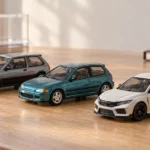
There is no single “correct” way to collect. Some collectors build complete yearly sets; others focus on one manufacturer, casting, era, color, motorsport theme, movie franchise, premium line, or vintage period. A clear focus usually saves money and storage space while making the collection more meaningful.
Beginner Basics: How to Start Right
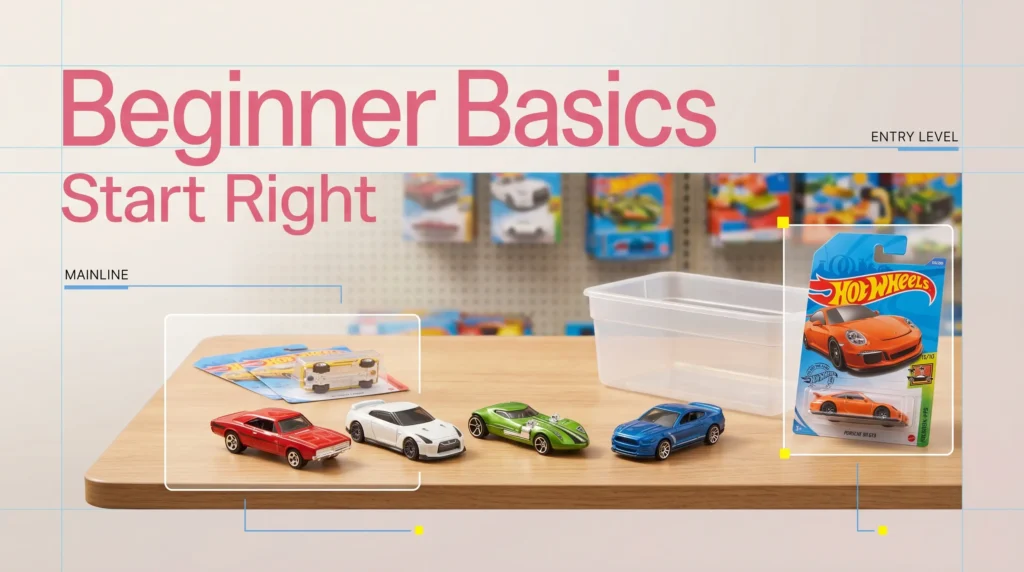
- Buy what you like first. A collection built around personal interest is easier to maintain than one built around price predictions.
- Choose a focus. JDM, muscle, Porsche, Ferrari, trucks, fantasy castings, race cars, one casting, one year, or one premium line are all workable starting points.
- Learn condition early. Paint wear, bent axles, damaged cards, cracked blisters and restoration all matter to collectors.
- Track duplicates. Once the collection grows, a simple inventory prevents accidental repeat purchases.
- Use current release resources. The 2026 Hot Wheels release hub and case-code guide help with current assortments.
If you are completely new to the hobby, our Hot Wheels collecting for beginners guide walks through the essential first steps in more detail.
Hot Wheels Product Lines Explained
Price varies by retailer and country, so it is more useful to understand the role of each product line than to memorize one price.
For a broader look at how these lines fit into the current collecting year, see our complete guide to 2026 Hot Wheels releases.
| Product line | Where it fits | Typical features |
|---|---|---|
| Mainline | Core retail assortment | Broad selection, standard mainline wheels/finishes, yearly case sequence |
| Car Culture | Premium themed assortment | Licensed themes, premium detailing, metal/metal construction on many releases, Real Riders |
| Boulevard | Premium collector assortment | Detailed licensed and enthusiast-focused castings, Real Riders |
| Team Transport | Premium car + transporter | Paired vehicle and hauler presentation with premium detailing |
| RLC / Mattel Creations | Collector-direct releases | Member exclusives and limited collector releases; many use Spectraflame paint and Real Riders |
Product specifications vary by release; check the individual product rather than assuming every premium car uses identical construction.
Hot Wheels id, the NFC-enabled connected-play line, was discontinued at the end of 2023 along with its related apps and services. Existing cars remain collectible, but the system is no longer an active product platform.
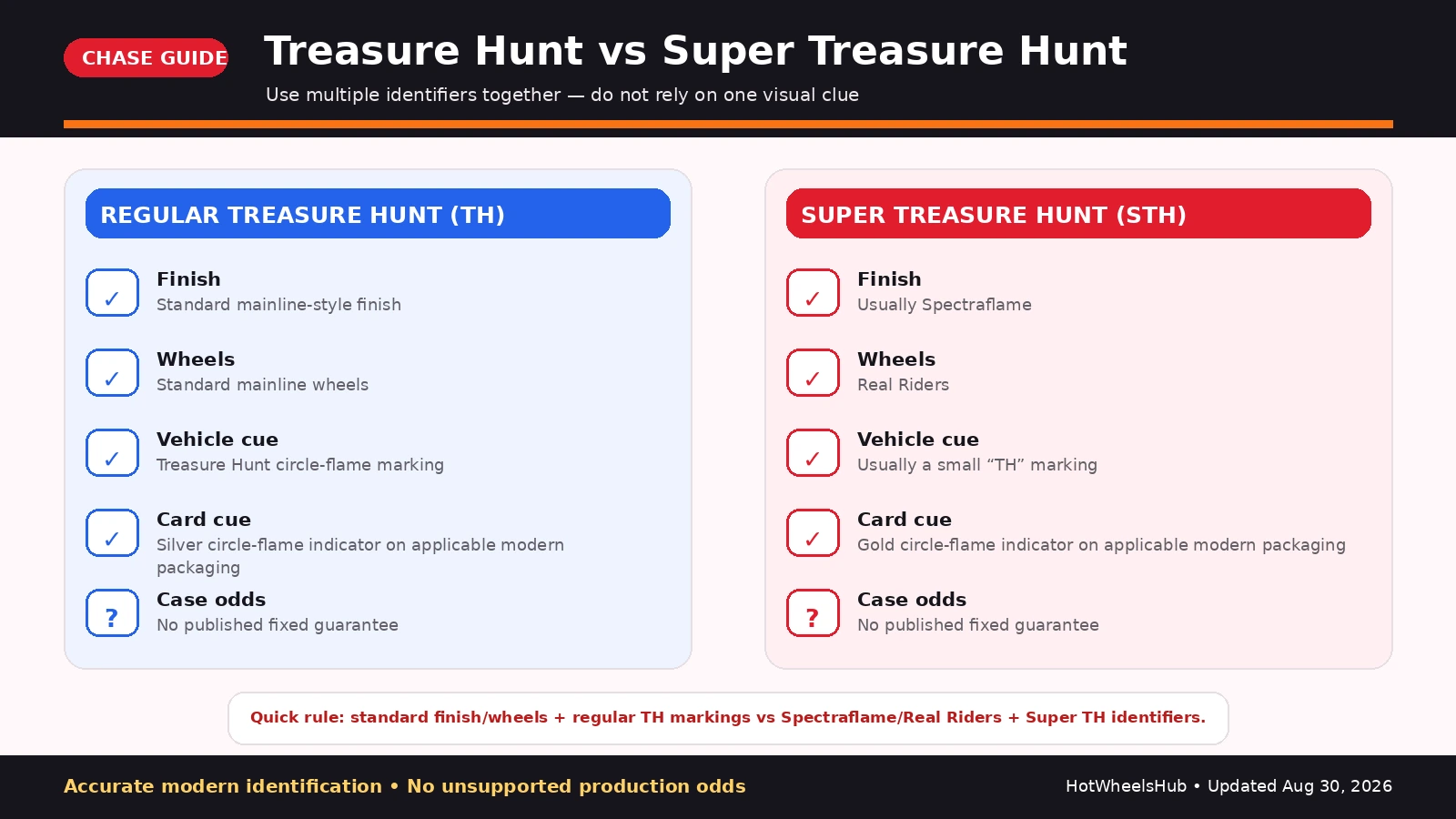
Treasure Hunts vs Super Treasure Hunts
 Tap image to view full size
Treasure Hunts and Super Treasure Hunts are chase cars within the mainline ecosystem, but they are not the same thing.
| Feature | Regular Treasure Hunt | Super Treasure Hunt |
|---|---|---|
| Finish | Standard mainline-style finish | Usually Spectraflame |
| Wheels | Standard mainline wheels | Real Riders |
| Vehicle cue | Treasure Hunt circle-flame marking | Usually a small “TH” marking |
| Card cue | Silver circle-flame indicator on applicable modern packaging | Gold circle-flame indicator on applicable modern packaging |
| Guaranteed in every case? | No published fixed guarantee | No published fixed guarantee |
For current models, use the 2026 Treasure Hunt & Super Treasure Hunt tracker. For rarity and insertion-odds context, see how rare Super Treasure Hunts are.
For a complete identification walkthrough, use our 2026 Hot Wheels Treasure Hunt guide for symbols, paint, wheels, and Super TH identification details.
For a complete identification walkthrough, use our 2026 Hot Wheels Treasure Hunt guide for symbols, paint, wheels, and Super TH identification details.
How to Read Case Codes
Collectors use case letters and carton markings to follow annual mainline assortments. A case letter helps identify where an assortment sits in the yearly sequence, but it should not be treated as a guaranteed calendar month or a promise that every physical carton contains the same chase car.
The outer case also includes assortment and production information that can be confused with the collector shorthand for the case letter. Use the dedicated Hot Wheels case-code guide before trying to decode shipping-carton markings from memory.
First Editions, New Models and Collector Numbers
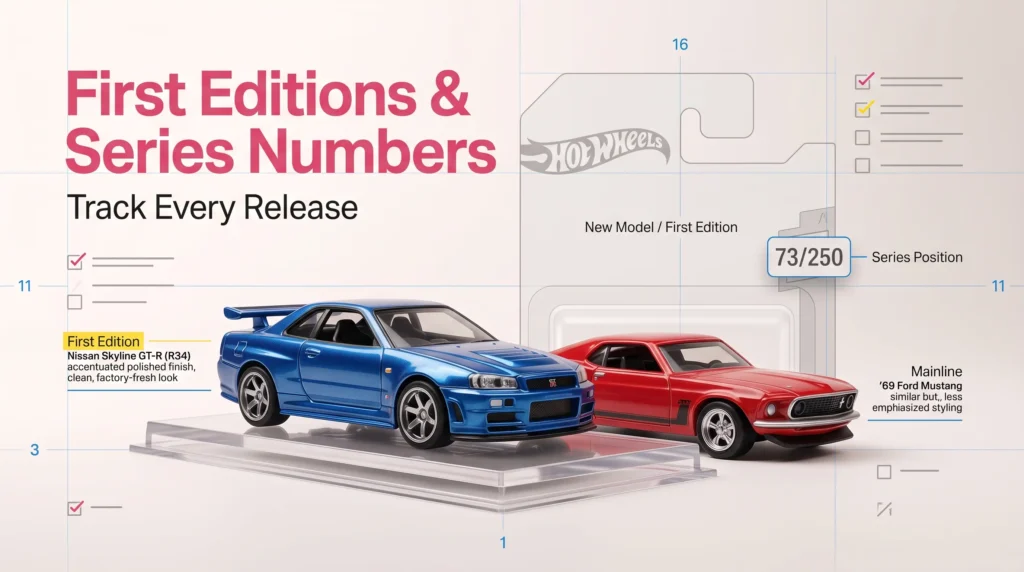
A new casting is a vehicle design entering the Hot Wheels lineup for the first time. Collectors often pay attention to first-year versions because they establish the casting’s release history, but being a first release does not automatically make a car rare or valuable.
Modern cards may show a collector number such as 73/250 plus a mini-series position. Those numbers are useful checklist references; they are not production counts.
Vintage Hot Wheels and the Redline Era
“Redline” is collector shorthand for the early Hot Wheels era associated with tires carrying a red stripe. The original cars debuted in 1968, and references differ slightly on where collectors draw the end of the Redline period as Mattel transitioned toward later wheel styles.
The early cars are known for features such as Spectraflame finishes, metal construction and the styling of Mattel’s Original 16. They can be highly collectible, but value varies dramatically by casting, color, originality and condition.
The famous Pink Rear-Loading Beach Bomb: this prototype is a useful example of how exceptional one-off or near-one-off pieces differ from ordinary production cars. Public reporting has placed its estimated value around $175,000; that figure should not be treated as the sale price of a typical Redline or even a typical Beach Bomb.
Condition Grading: Describe the Car, Not Just a Number
Collectors sometimes use a C1–C10-style condition scale, but it is not one universal Mattel grading standard and sellers can interpret it differently. For buying or selling, detailed photographs and a written condition description are more reliable than a grade alone.
Check paint loss, chips, wheel wear, bent axles, window damage, base wear, missing parts and evidence of restoration.
Check creases, edge wear, hanger damage, blister cracks, yellowing, lifting, price stickers and moisture damage.
For vintage pieces, disclose replaced wheels, reproduction decals, repainting, repaired axles or other restoration.
Carded vs Loose: Which Is Right for You?
| Factor | Carded / unopened | Loose / opened |
|---|---|---|
| Handling | Limited | Full access to the car |
| Storage | Needs more wall/bin space and card protection | Can be stored compactly in compartments or cases |
| Display | Peg walls, protectors, frames | Cases, shelves, dioramas, tracks |
| Collector value | Can be higher for an otherwise comparable desirable piece | Depends heavily on condition, rarity and the collector market |
| Best choice | For collectors who value original packaging | For collectors who want to handle, photograph or display the car itself |
The Red Line Club (RLC)
The Red Line Club is Mattel’s official annual Hot Wheels collector membership. As of this update, the digital membership is $9.99 per year. Benefits include access to members-only items, member content/forums, voting opportunities and priority access for some releases.
Membership does not guarantee that you will be able to buy every limited product. Mattel also offers a separate Membership Car Kit for an additional charge rather than automatically including a membership car with every digital enrollment.
For a detailed explanation of membership costs, exclusive drops, checkout preparation, and Overdrive, read our Hot Wheels RLC membership and buying tips.
For current cars and sale dates, use the 2026 Hot Wheels RLC Release Calendar.
How to Spot an Error Car
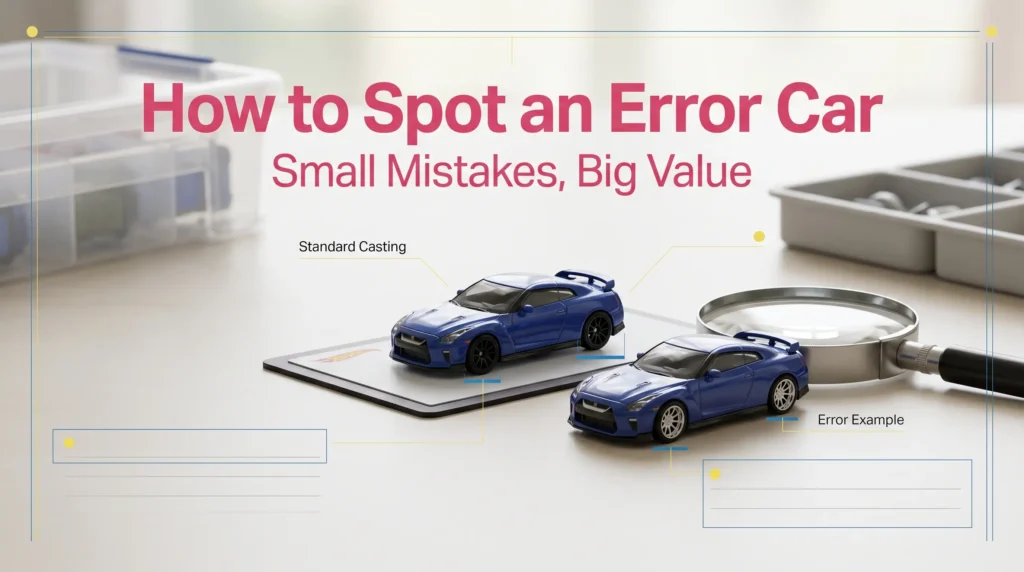
- Missing, shifted or doubled decoration
- Mismatched or missing wheels
- Assembly problems or incorrect components
- Packaging mismatches that can be documented as factory errors
Compare the car with confirmed normal examples and document the difference clearly. Customs, swapped wheels and opened/resealed packages can be mistaken for factory errors.
Authenticating Vintage Redlines
Authentication is more complicated than checking one feature. Weight, paint, wheel construction, rivets, axles, base markings, casting details and known restoration techniques all matter, and skilled restorations can fool inexperienced buyers.
For expensive vintage purchases, request high-resolution photos, provenance when available, and opinions from experienced Redline specialists. Avoid relying on claims such as “originals are always heavier” or “the red stripe is always molded” as standalone authentication tests.
Hot Wheels, Matchbox and Other Die-Cast Brands
Hot Wheels is only one part of the 1:64-scale hobby. Matchbox emphasizes a different mix of realistic road vehicles and utility models, while brands such as Johnny Lightning, Mini GT, Auto World and others attract collectors with their own themes, construction and licensing.
There is no need to treat brands as direct substitutes. Many collectors mix them based on vehicle interest, scale compatibility and display style.
Storage and Display
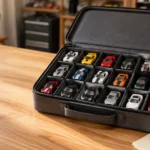
Use compartment cases, acrylic displays, drawer systems, shelves or enclosed cabinets that prevent cars from rubbing together.
Use purpose-made die-cast protectors, bins or boxes that support the card without crushing the blister.
Limit direct sunlight, excessive heat and high humidity, especially for vintage paint, decals and packaging.
For storage-product comparisons, see the best Hot Wheels storage cases guide.
Investment Strategy: What Actually Goes Up?
 Tap image to view full size
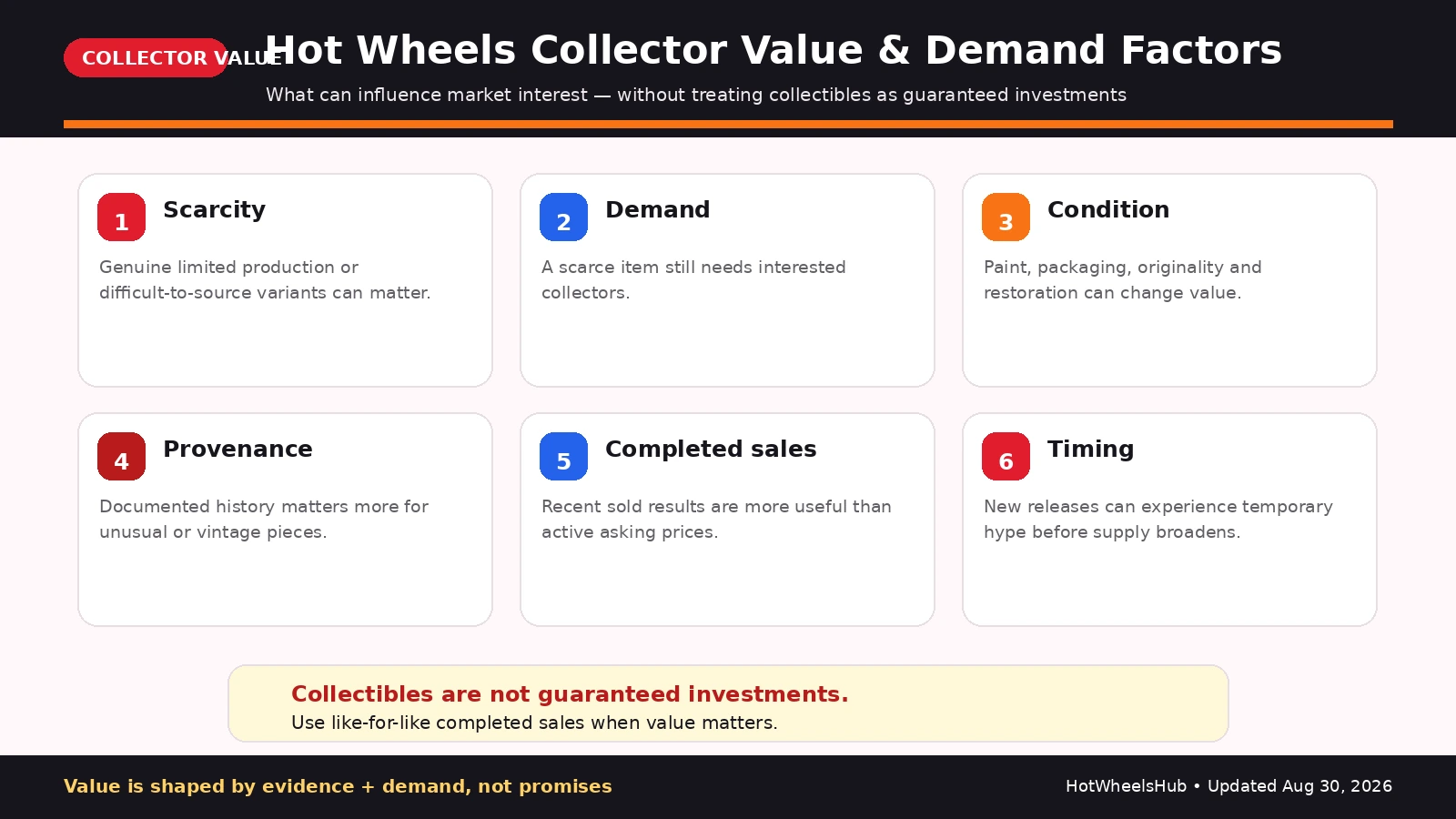
Most Hot Wheels should be treated as collectibles, not guaranteed investments. Some pieces attract sustained demand because of scarcity, casting popularity, condition, provenance or collector history, but there is no rule that a Super Treasure Hunt, RLC release, first edition or licensed collaboration must appreciate.
- Scarcity: genuine limited production or difficult-to-source variants can matter.
- Demand: a scarce item still needs interested collectors.
- Condition and originality: especially important for vintage cars and packaging.
- Completed sales: recent sold results are more informative than active asking prices.
- Timing: newly released cars can experience temporary hype before supply broadens.
Selling a Collection
For individual higher-value pieces, accurate descriptions, clear photos and careful packaging matter more than platform hype. For common cars, grouped lots or local collector sales can be more efficient than listing every car individually.
Before pricing, compare recently completed sales for the same casting, variation and condition. Separate restored, customized or damaged items from original examples so buyers know exactly what they are getting.
Organizing a Large Collection
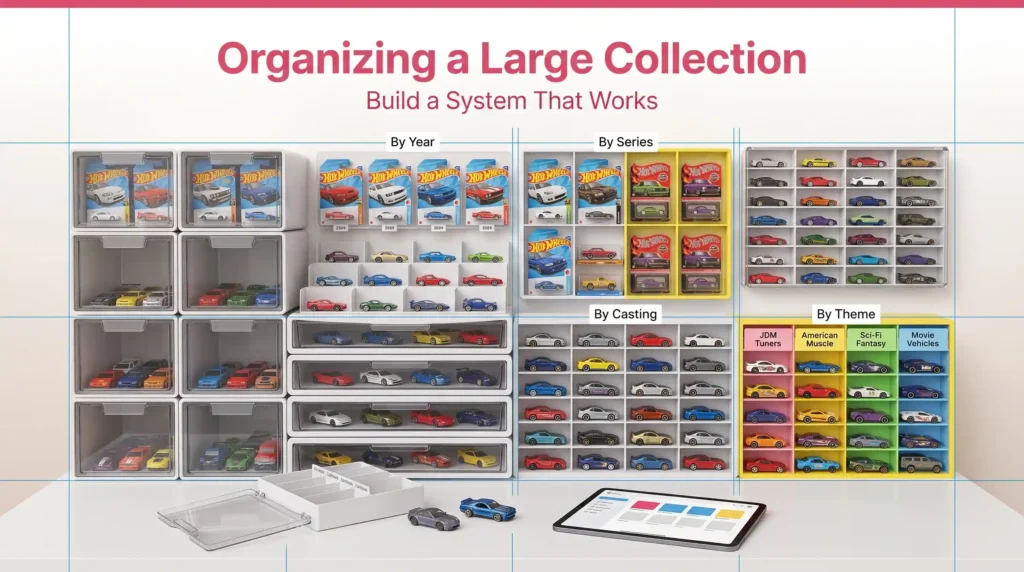
- By year: useful for annual mainline completion
- By product line: Mainline, Premium, RLC and vintage kept separately
- By casting: every version of one vehicle together
- By theme: JDM, muscle, trucks, racing, movies or another personal category
Your tracking system should record at least the casting, year/release, series, quantity, condition and storage location. Optional fields can include purchase price, duplicates, wishlist status and trade notes.
Community Resources
Collector communities can be useful for identifying variations, checking current case activity, comparing restorations and learning niche history. Reddit, Facebook groups, YouTube channels, local swap meets and specialist forums all serve different parts of the hobby.
Use community information as a lead rather than automatic proof. For rarity, production or high-value authentication claims, look for photographs, documented references or multiple independent sources.
Key Hot Wheels Terminology
| Term | Meaning |
|---|---|
| Casting | The vehicle design/mold family used to produce versions of a model |
| Tampo | Collector shorthand for printed decoration applied to the vehicle |
| Spectraflame | Hot Wheels finish associated with the original era and many modern collector/chase releases |
| MOC | Common collector shorthand for “Mint on Card”; verify actual card/blister condition rather than relying on the label alone |
| TH | Treasure Hunt |
| STH | Super Treasure Hunt |
| RLC | Red Line Club |
| Redline | Collector term for early Hot Wheels associated with red-striped tires |
| New Model / First release | A casting appearing in the Hot Wheels lineup for the first time |
| Error | A documented production/assembly/decoration mistake that reached retail |
| Case letter | Collector shorthand for a mainline assortment position in the yearly case sequence |
| Real Riders | Mattel’s name for premium-style wheels with rubber tires used on many collector releases |
Related Hot Wheels Collector Guides
Conclusion
Hot Wheels collecting becomes easier when you decide what matters to you, learn the differences between product lines, document condition accurately and keep a basic inventory. A low-cost mainline car and a rare vintage Redline can belong in the same collection without needing the same buying strategy.
Use current release trackers for modern hunting, specialist references for vintage or unusual pieces, and completed-sale evidence when value matters. The strongest collection is one you can understand, organize and continue enjoying.
Sources and Verification
Mattel: current RLC digital membership is listed at $9.99/year; membership provides access/opportunities but does not guarantee every limited release. Mattel separately lists a Membership Car Kit.
Mattel: Hot Wheels debuted in 1968 with the Original 16, and Mattel’s current collector material continues to describe Spectraflame and Real Riders on premium RLC releases.
Mattel: Hot Wheels id hardware/apps/services were discontinued at the end of 2023.
Market/history references: exceptional prototype valuations such as the Pink Rear-Loading Beach Bomb are treated as outliers and estimates rather than representative collector prices.
HotWheelsHub is an independent collector resource and is not affiliated with, endorsed by, or an official source of Mattel or Hot Wheels.
Hot Wheels Collecting FAQ
How should a beginner start collecting Hot Wheels?
Pick a theme or group of cars you genuinely like, learn the difference between mainline and premium releases, and start recording what you own before the collection gets large. You do not need to buy every new release or chase expensive cars to build a serious collection.
What Hot Wheels should I collect first?
There is no single best series. Mainline cars are an accessible way to learn castings and yearly releases, while premium lines can appeal to collectors who prefer more detailed finishes and Real Riders. Choose based on the vehicles, brands, or themes you actually want to keep.
How do I know whether a Hot Wheels car is valuable?
Identify the exact casting, year, variation, and product line, then compare recently completed sales for examples in similar condition. Rarity, collector demand, originality, vehicle condition, and packaging condition can all matter. Active asking prices alone are not reliable proof of value.
What does MOC mean in Hot Wheels collecting?
MOC is collector shorthand for “Mint on Card,” meaning the car is still on its original card. The phrase does not guarantee that the card or blister is actually mint, so inspect creases, edge wear, blister cracks, yellowing, and other damage separately.
What is the difference between a Treasure Hunt and a Super Treasure Hunt?
Regular Treasure Hunts generally retain standard mainline-style wheels and finishes and use the Treasure Hunt circle-flame identification system. Modern Super Treasure Hunts typically use Spectraflame paint, Real Riders, a TH marking on the vehicle, and a gold circle-flame card indicator on applicable packaging.
How much does the Hot Wheels Red Line Club cost?
Mattel currently lists the Red Line Club digital membership at $9.99 per year. Membership provides access to members-only products, content, and other benefits, but it does not guarantee that a member can purchase every limited release. A Membership Car Kit is offered separately for an additional charge.
Are Hot Wheels a good investment?
Hot Wheels should not be treated as guaranteed investments. Some scarce or historically important pieces may see their market value rise, while many mass-produced cars remain close to retail prices or fluctuate with collector demand. Buy primarily for the collection, and use recent completed sales when value matters.
How should I store Hot Wheels?
Keep cars away from prolonged direct sunlight, excessive heat, and high humidity. Loose cars benefit from individual compartments or enclosed displays to prevent rubbing, while carded cars should be supported to prevent the card and blister from being crushed or bent.
What is the best way to organize a large Hot Wheels collection?
Common systems include organizing by year, product line, casting, or theme. Whichever method you choose, record the casting, release/year, series, quantity, condition, and storage location so you can find cars and avoid accidental duplicates.